
Hey there, hoops fans and curious minds! Ever wonder how a simple game invented with peach baskets blossomed into a global sensation, capturing the hearts of over 3.3 billion people worldwide and becoming the planet’s second most beloved sport?
From its humble origins to the dazzling spectacle we see today, basketball’s journey is a testament to innovation and passion. In today’s lightning-fast digital age, this sport isn’t just about incredible dunks and clutch shots anymore.
We’re talking cutting-edge AI transforming player performance, advanced analytics shaping game strategies, and immersive VR/AR experiences redefining how fans engage with every dribble and swish.
With the rise of international superstars and the fascinating evolution of “positionless basketball,” the game is more dynamic than ever. We’re constantly seeing new trends emerge, from predictive analytics for injury prevention to AI-integrated coaching, and trust me, the future of this sport is nothing short of electrifying.
Stick around as we explore how this phenomenal sport continues to push boundaries, predict future trends, and captivate new generations. It’s hard to imagine a world without basketball, isn’t it?
That electrifying squeak of sneakers on the court, the roar of the crowd after a three-pointer, the sheer artistry of a perfectly executed play. But this global phenomenon, now captivating billions, had the most wonderfully unassuming beginning back in 1891, born out of one man’s creative genius to keep his students active during a harsh New England winter.
What started with just two peach baskets and a simple set of rules quickly transcended a gymnasium in Springfield, Massachusetts, slowly weaving its way into the fabric of cultures worldwide before exploding into the magnificent sport we celebrate today.
I’ve always been fascinated by how such a simple concept could ignite such a powerful global movement, from local YMCAs to the grand stage of the NBA.
There’s a rich, vibrant story behind every bounce of the ball, and trust me, it’s one you won’t want to miss. Let’s uncover the full, fascinating story of basketball’s journey together!
Alright, let’s dive into the fascinating world of basketball and see how this incredible sport continues to reinvent itself! I’ve been a fan my entire life, and honestly, the pace of change we’re witnessing today is truly mind-blowing.
It’s not just about the incredible athletes anymore; it’s about a symphony of innovation, strategy, and pure passion. Get ready, because we’re about to explore how basketball is pushing boundaries like never before.
The Court is Your Canvas: Embracing Positionless Play
You know, for the longest time, basketball was pretty rigidly defined. You had your point guards, shooting guards, small forwards, power forwards, and centers, each with their distinct roles. I remember growing up, if you were tall, you were automatically shoved into the center position, expected to rebound and protect the paint, no questions asked! But oh, how times have changed! The game today is a beautiful, fluid dance where traditional roles are blurring, giving way to what we affectionately call “positionless basketball.” This isn’t just a fancy term; it’s a fundamental shift in how teams are built and how the game is played. Players are no longer confined by their size or a number on their jersey; instead, they’re expected to do it all – dribble, pass, shoot from anywhere, and defend multiple positions. It’s truly a sight to behold when you see a 7-foot player like Victor Wembanyama handle the ball, shoot threes, and defend guards with ease. This versatility makes the game incredibly dynamic and unpredictable, forcing every player to develop a more well-rounded skillset. I personally love watching the creativity this unleashes on the court. It feels like every possession could bring something new, something unexpected, and that’s what keeps me glued to the screen.
The Three-Point Revolution’s Domino Effect
One of the biggest drivers behind positionless play is undoubtedly the three-point revolution. I mean, who would have thought a shot introduced in 1979 would completely redefine offensive strategies? We’ve moved far beyond traditional post-up play, with teams now prioritizing spacing and long-range shooting. Centers like Nikola Jokić or Karl-Anthony Towns, who can confidently step out and drain a three, become invaluable because they stretch the defense, opening up lanes for drives and cuts. This emphasis on perimeter shooting has made the game faster, with more possessions and, frankly, more exciting scoring. It forces defenses to adapt, often employing “switching defenses” where players can guard multiple positions seamlessly to avoid mismatches. It’s a constant chess match, and as a fan, that strategic layer just adds so much to the enjoyment.
The Rise of the Hybrid Athlete
This evolving style has given birth to a new breed of athlete – the hybrid player. Gone are the days of hyper-specialized roles. Now, coaches are looking for players who can contribute in every facet of the game. Think of versatile players like Giannis Antetokounmpo or Kevin Durant, who can score inside and out, grab rebounds, and initiate offense. This trend isn’t just an NBA phenomenon; it’s trickling down to college and even youth basketball, where young players are encouraged to develop a diverse skill set from an early age. I’ve personally seen young players benefit immensely from this approach, as it fosters a deeper understanding of the game and builds confidence across various situations. It’s all about adaptability, and the future stars of basketball will be those who can truly do it all.
Beyond the Box Score: The Analytics Revolution Reshaping Strategy
Basketball has always had its numbers – points, rebounds, assists. But let me tell you, what’s happening now with advanced analytics is a whole different ball game! It’s like switching from a simple calculator to a supercomputer. For years, teams relied on traditional scouting and gut feelings, and while those still have a place, data analytics has fundamentally changed how decisions are made, from draft picks to in-game adjustments. I remember thinking, “How much more can they possibly analyze?” But every season, the insights get deeper. Teams are now using sophisticated statistical models to examine everything from shooting percentages under specific conditions to defensive effectiveness against certain play types. It’s not just about who scored the most points; it’s about *how* they scored, *when*, and *against whom*. This shift to a data-driven approach is truly a game-changer, giving teams an unprecedented advantage in understanding player performance and optimizing strategies.
Unveiling Hidden Patterns with Big Data
The beauty of big data in basketball is its ability to uncover patterns that would be impossible for the human eye to spot. Optical tracking technology, like SportVU cameras, captures the movement of every player and the ball on the court, generating massive datasets. These systems can track movement efficiency, ball trajectory, shot arcs, and even player fatigue in real-time. Coaches can then use this data to analyze offensive and defensive schemes, refine pick-and-roll coverage, or even identify player tendencies that lead to injuries. It’s not about replacing coaches’ intuition but empowering them with objective information to make more informed decisions. I’ve found that this level of detail offers a much richer understanding of the game, not just for the pros, but for any enthusiast who enjoys the strategic side of basketball.
Analytics in Player Development and Injury Prevention
The impact of analytics extends far beyond game strategy; it’s revolutionizing player development and, crucially, injury prevention. By analyzing biomechanics and workload data from wearable technology, teams can identify potential injury risks and tailor training programs to mitigate them. This means less time on the sidelines and more time showcasing incredible talent. Personalizing training based on specific strengths and weaknesses, identified through AI-powered performance analytics, allows players to focus on what truly needs improvement, whether it’s shooting accuracy, agility, or decision-making. It’s about maximizing potential and extending careers, which for me, means getting to watch my favorite players perform at their best for longer. This proactive approach to player health is a significant step forward for the sport.
Unleashing Potential: How Tech is Elevating Player Performance
When I think about basketball training today versus even a decade ago, it’s night and day. Technology isn’t just a gadget on the sidelines anymore; it’s an indispensable part of how players hone their craft and reach peak performance. From wearable devices that track every heartbeat to virtual reality simulations that put players in game-time situations, the advancements are truly mind-boggling. I’ve seen how these tools offer insights that no coach, however experienced, could glean on their own. It’s about data, precision, and giving athletes every possible edge to be their absolute best. This isn’t just for the pros, either; cutting-edge tech is becoming more accessible, allowing aspiring players to train smarter too.
Wearable Tech and Smart Equipment: The Athlete’s Edge
Wearable technology has become a staple in basketball training. Devices like smartwatches, fitness trackers, and biometric sensors provide real-time data on everything from heart rate and step count to exertion levels and recovery status. This constant stream of information allows coaches and trainers to optimize training regimens, prevent overtraining, and reduce the risk of injury. I recall a time when injuries were often a mystery; now, with this data, teams can be incredibly proactive. Beyond wearables, we’re seeing smart basketballs that track shooting techniques, dribbling patterns, and spin rates, providing instant feedback through smartphone apps. Smart courts with integrated cameras and sensors can measure velocity, intensity, and shot outcomes with incredible accuracy. It’s like having a personalized analytics team constantly analyzing your game, telling you exactly where to improve. This immediate, data-driven feedback is revolutionary.
Virtual and Augmented Reality for Next-Level Training
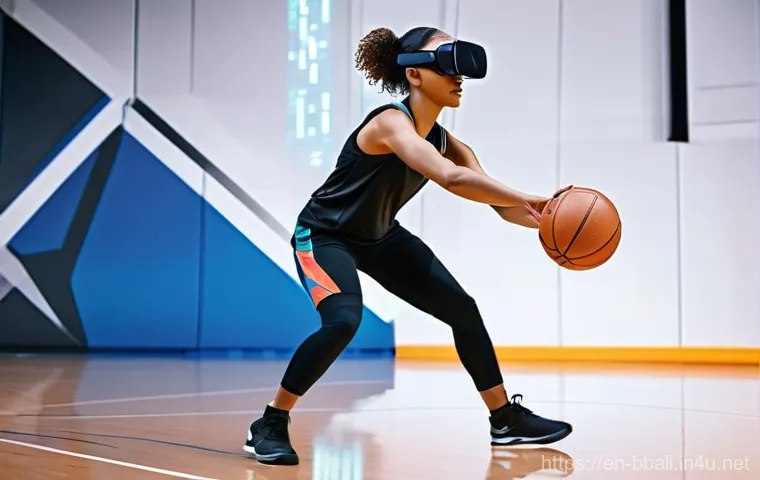
What truly excites me is the potential of virtual (VR) and augmented reality (AR) in player development. Imagine being able to practice against virtual defenders, simulate high-pressure game scenarios, or refine your decision-making without the physical toll of a real game. That’s exactly what VR simulations offer. Teams like the Sacramento Kings have been pioneers, using VR to help players practice defensive strategies and offensive plays. This kind of immersive training enhances mental preparation, court awareness, and confidence. AR, on the other hand, can overlay digital elements onto the real world, providing instant statistical feedback during drills or visualizing play diagrams right on the court. While the technology is still evolving, the future of training looks incredibly immersive and effective. I can only dream of what I could have achieved with these tools back in my playing days!
From Couch to Courtside: Immersive Fan Experiences Are Here
As much as I love watching a game live, the truth is, most of us experience basketball from our living rooms, on our phones, or through a screen. But the way we engage with the sport is undergoing a dramatic transformation, making those remote experiences feel incredibly personal and immersive. It’s no longer just about watching; it’s about *feeling* like you’re part of the action, no matter where you are. The NBA, in particular, has been a trailblazer in understanding that fans want more than just scores – they crave behind-the-scenes access, real-time reactions, and personalized content. And honestly, they’re delivering in spades, making every fan feel a deeper connection to the game we all adore.
The Power of Digital and Immersive Media
The digital era has ushered in a new dawn for fan engagement. Social media platforms are now interactive playgrounds where fans can get raw, authentic content from players and teams – think post-game locker room footage or training snippets. I find myself scrolling through team accounts during games, getting real-time highlights and reactions, truly enhancing the viewing experience. But beyond social media, augmented reality (AR) and virtual reality (VR) are redefining what it means to be a fan. Imagine stepping onto the court virtually, reliving a legendary play from your favorite player’s perspective, or even attempting a virtual dunk yourself. These experiences are becoming a reality, offering premium virtual tickets with unique camera angles and interactive elements. The NBA even rolled out VR options for fans during the 2024 All-Star Weekend, proving that this immersive tech is quickly becoming mainstream. It’s about bridging the gap between the physical and virtual, allowing fans to personalize their experience and deepen their connection to their beloved teams.
Personalization and Community Building

Beyond the bells and whistles of AR/VR, the league is mastering personalization and community building. Using data analytics, platforms are delivering tailored highlights, player interviews, and game summaries based on individual viewing habits. If you’re a huge fan of a specific player, the algorithms ensure you get all the content related to them. This kind of smart personalization treats fans as individuals, driving loyalty. Moreover, the NBA leverages storytelling, selling personalities, rivalries, and narratives much like a TV drama. This makes the league appealing to a wider audience, extending beyond just hardcore basketball purists. Mobile apps from teams often gamify fandom, rewarding engagement with points that can unlock digital collectibles or exclusive behind-the-scenes content. It creates a sense of belonging and ownership, making us feel truly invested in the NBA ecosystem.
Global Hoops: The World’s Love Affair with Basketball
It’s truly incredible to see how basketball, a game born in a small gym in Massachusetts, has exploded into a global phenomenon. I remember when international players in the NBA were a rarity, a novelty almost. Now, they’re the norm, and some of the league’s brightest stars hail from every corner of the globe. This isn’t just about talent; it’s a testament to the universal appeal of the game and the strategic efforts to make it accessible and exciting worldwide. From bustling city courts in the Philippines to European leagues like the EuroLeague, basketball has woven itself into diverse cultural fabrics. The energy it generates internationally is palpable, and I find it genuinely inspiring to see how it transcends language and borders, uniting billions under the banner of hoops.
International Stars and League Expansion
The influx of international talent into the NBA has been nothing short of transformational. Just look at the MVP candidates in recent years; many have been foreign-born, showcasing the sheer depth of global talent. Players like Nikola Jokić, Luka Dončić, and Giannis Antetokounmpo aren’t just great players; they’re global icons, inspiring millions in their home countries and beyond. The NBA has strategically expanded its reach through international broadcasts, grassroots programs, and even hosting games abroad, nurturing a massive global fanbase. It’s fascinating to watch how different playing styles from around the world are influencing the game, contributing to its dynamic evolution. This globalization creates a rich tapestry of basketball, constantly evolving and absorbing new influences, which in my opinion, makes the game even better.
FIBA and the Growing Fanbase
The growth isn’t just confined to the NBA. International competitions like the FIBA Basketball World Cup have seen a massive surge in interest, underscoring basketball’s soaring global popularity. Research shows that basketball now boasts over 3.3 billion fans globally, making it the second most popular sport on the planet. What’s particularly striking is the significant increase in interest among younger demographics, especially those aged 16-29, in countries across Asia, Europe, and the Middle East. This rising tide of fandom is fueled by increased participation rates, with hundreds of millions playing the sport worldwide, particularly in places like China. It’s a fantastic reflection of how truly universal the game has become, a shared passion that connects people irrespective of their background.
The Slam Dunk Economy: Inside Basketball’s Billions
Let’s be real: while we love the athleticism and the drama, basketball is also a massive business, a well-oiled machine generating billions. The journey from a simple YMCA game to a global financial powerhouse is absolutely astounding. I’ve always been curious about the inner workings, how this beloved sport manages to captivate not just our hearts but also significant economic capital. It’s not just about ticket sales anymore; it’s a complex web of media rights, partnerships, and global expansion that collectively form an incredible revenue engine. Understanding these financial gears helps us appreciate the scale and influence of the sport we follow so passionately.
Multi-Billion Dollar Revenue Streams
The NBA, as a prime example, has mastered the art of monetization. Its primary revenue streams are colossal, with broadcasting rights leading the charge. Multi-billion-dollar TV contracts with major networks and international partners form the backbone of the league’s earnings. These deals ensure games are broadcast globally, reaching audiences far and wide. Beyond TV, sponsorships with global brands contribute hundreds of millions annually, visible everywhere from jersey patches to arena naming rights. And let’s not forget the enduring appeal of game-day experiences: ticket sales, concessions, and merchandise still rake in substantial income. I mean, who hasn’t bought a jersey or a team hat? It’s part of the fandom! The league’s ability to consistently generate such massive income underscores its immense popularity and business acumen.
Player Wealth and Global Brand Building
The financial success isn’t confined to the league and teams; it dramatically impacts the players. While their colossal salaries are well-known, elite players have also become global business empires in their own right. Beyond their team contracts, they generate significant income through lucrative endorsement deals with shoe companies, equity investments in various ventures, and media projects like podcasts and documentaries. Signature shoe lines, in particular, generate substantial royalties and extend players’ global reach. The NBA’s strategic focus on promoting player personalities and narratives amplifies their individual brand power, turning athletes into cultural icons. This global branding, coupled with digital content and social media sponsorships, means that the financial ecosystem of basketball is incredibly dynamic, offering players opportunities that extend far beyond their playing careers. It’s truly inspiring to see athletes leverage their platforms to build such impactful legacies.
| Revenue Stream | Description | Impact on League/Teams |
|---|---|---|
| Broadcasting Rights | Multi-billion dollar deals for TV and streaming coverage (domestic & international). | Primary income source, fuels salary cap, global exposure. |
| Sponsorships & Advertising | Partnerships with global brands, jersey sponsorships, arena naming rights. | Significant annual revenue, brand association, enhanced marketing. |
| Ticket Sales & Game-Day Revenue | Profits from live game attendance, VIP seating, concessions, parking. | Direct income for teams, enhances fan experience. |
| Merchandise & Licensing | Sales of jerseys, apparel, collectibles, video games, signature shoes. | Capitalizes on fan loyalty, player brands, global sales. |
| Digital Content & Fan Engagement | Streaming services, apps, social media, AR/VR experiences, NFTs. | New revenue channels, deepens fan connection, personalized content. |
글을 마치며
Whew! What a journey we’ve taken through the ever-evolving world of basketball, right? It’s truly mind-blowing to see how this incredible sport continues to innovate, from the players on the court pushing boundaries with positionless play to the cutting-edge tech shaping everything from training to fan engagement. It’s clear that basketball isn’t just a game; it’s a dynamic, global phenomenon that keeps us all on the edge of our seats, constantly delivering new thrills and unforgettable moments. This beautiful blend of athleticism, strategy, and technology ensures that the future of hoops is brighter and more exciting than ever before, and I, for one, can’t wait to see what comes next!
알아두면 쓸모 있는 정보
1. Catch a Game with New Eyes: Next time you’re watching, try to spot how many players are truly “positionless” – you’ll be amazed at how many big guys are handling the ball or guards are battling in the paint! It’s a great way to appreciate the modern game.
2. Dive into Analytics: Don’t just look at points. Explore advanced stats like true shooting percentage (TS%) or player efficiency rating (PER) to understand a player’s real impact beyond the traditional box score. It’s a deeper dive that makes you feel like a true insider!
3. Explore Immersive Fan Experiences: Check out official league apps or streaming services for augmented and virtual reality options during big games. Experiencing a game from a courtside VR seat or seeing real-time stats overlaid on your screen can totally change how you watch!
4. Follow the Global Talent: Keep an eye on international leagues and up-and-coming players from around the world. The next global superstar might be honing their skills far from the NBA spotlight, and knowing about them early is a real conversation starter.
5. Understand the Business Side: Take a moment to appreciate the sheer economic scale of basketball. From billion-dollar media deals to lucrative player endorsements, it’s fascinating to see how the passion for the game translates into a massive industry, influencing global trends.
중요 사항 정리
The world of basketball is undergoing a rapid and exciting transformation. We’re seeing a definitive shift towards “positionless play,” where versatility trumps traditional roles, driven significantly by the three-point revolution. Advanced analytics are no longer just a niche but a fundamental tool, reshaping team strategies, player development, and injury prevention, offering insights beyond human observation. Technology, from wearables to VR/AR, is empowering athletes to train smarter and reach unprecedented performance levels. Fan engagement is evolving into deeply immersive and personalized experiences, bridging the gap between remote viewers and the live action. Finally, basketball’s global expansion and multi-billion-dollar economy underscore its status as a worldwide cultural and financial powerhouse, connecting billions and creating vast opportunities for players and businesses alike.
Frequently Asked Questions (FAQ) 📖
Q: How did basketball, this global phenomenon, actually get started? I mean, who just wakes up and invents a sport with peach baskets?
A: Oh man, it’s such a cool story, one that always gets me thinking about how truly revolutionary simple ideas can be! You know, it all started back in 1891, in Springfield, Massachusetts.
Picture this: a super cold New England winter, and a physical education instructor named James Naismith was tasked with finding a new, less injury-prone sport to keep his students active indoors.
He literally looked around, grabbed a couple of peach baskets, nailed them ten feet high on the gymnasium balcony, and drafted up thirteen basic rules.
His goal was to create a game that relied more on skill and strategy than brute force, and honestly, he nailed it! It wasn’t about fancy dunks or three-pointers at first; it was about getting a ball into a basket.
From those humble peach baskets, a seed was planted that would blossom into the global spectacle we adore today. It always blows my mind how something so simple could ignite such a massive, worldwide passion.
I remember reading about it for the first time, and it felt like discovering a secret origin story for a superhero – only this hero wears sneakers!
Q: It seems like basketball is everywhere now! How did a game invented in a small US town become a global sensation that captures billions of fans?
A: That’s a fantastic question, and one I’ve pondered a lot myself as I’ve watched the game evolve! From my perspective, having followed basketball for decades, its global explosion is a blend of several powerful factors.
Initially, the YMCA played a massive role, spreading the game to different countries through their international network. Then, the inclusion of basketball in the Olympic Games really put it on a global stage, allowing countries worldwide to compete and fall in love with it.
But honestly, I think the real turning point came with the rise of international superstars and the NBA’s incredible global marketing push. Think about players like Yao Ming opening up the Chinese market, or legends like Dirk Nowitzki, and now, phenomenon like Luka Dončić and Nikola Jokić captivating audiences far beyond the U.S.
borders. The game’s inherent dynamism – the incredible athleticism, the strategic plays, the constant back-and-forth scoring – makes it universally exciting.
Plus, with streaming services and social media, it’s easier than ever for fans anywhere to connect with their favorite teams and players. It’s no longer just an American sport; it truly belongs to the world now, and that’s a beautiful thing to witness.
Q: With all this talk about
A: I, VR, and “positionless basketball,” how is technology truly changing the game for players and fans today, and what’s coming next? A3: Oh, you’re hitting on one of my absolute favorite topics right now!
The intersection of technology and basketball is mind-blowing. What I’ve seen firsthand is how AI and advanced analytics are totally revolutionizing player performance and strategy.
Teams are using data to track every single movement, shot, and pass, which helps with everything from optimizing training routines to preventing injuries – imagine predicting when a player might be at risk before it even happens!
From a fan’s perspective, VR and AR are making the game so much more immersive. I’ve tried some of these new VR experiences, and it’s almost like you’re courtside, or even on the court yourself!
And “positionless basketball”? That’s not just a trend; it’s a strategic evolution. With analytics showing the value of versatility, teams are prioritizing players who can shoot, pass, and defend multiple positions, blurring the traditional lines of point guard, forward, and center.
Looking ahead, I honestly believe we’ll see AI-integrated coaching becoming even more sophisticated, offering real-time tactical adjustments during games.
We might even see personalized fan experiences tailored by AI, giving you highlights and stats based on your favorite players or specific game moments.
It’s an electrifying time to be a basketball fan, and the future, let me tell you, is going to be even more spectacular!